Articles
Conflict between Trump Administration and Smithsonian by Jenny Feldman
This article provides an update on the ongoing conflict between the Smithsonian and the Trump administration regarding the institution’s independence and historical narratives. The tension stems from the President accusing the Smithsonian of failing to present a positive view of America and promoting narratives that portray Western values as “harmful and oppressive” in violation of Executive Order 14253 “Restoring Truth and Sanity to American History,” signed by Donald Trump on March 31, 2025. The administration has threatened to cut the Smithsonian’s federal funding—which makes up 62% of its $1 billion budget—if it does not comply with a broad request for internal records. Following two prior submissions of these records, on January 13, 2026, the Smithsonian submitted additional materials to the White House, including digital photographs of gallery labels and placards; exhibition plans, specifically those related to the United States’ 250th anniversary, and inventories of permanent museum holdings. The president has also directed Vice President JD Vance, a member of the Smithsonian’s governing Board of Regents, to ensure that new appointees to the 17-member panel have views in line with the Trump agenda. The current board, which includes Democratic and Republican elected officials as well as nine citizen members, has supported the institution’s independence, but as many as six seats could open this year, and nominees must be approved by the Republican-led Congress and signed off on by the president.
Art or Commerce? The Hidden Role of Tariff Law by Nawoon Yoon
U.S. tariff law required courts and customs officials to decide which imported items qualify as “art” and which are taxable commercial goods. These decisions are made because certain artworks may receive better tariff treatment. Over time, disputes over customs classifications have forced judges to distinguish between fine art and utilitarian objects. Judges often rely on factors such as originality, intention, and the presence of expressive content rather than just market value.
However, some objects blurred the line between decoration and function, like sculptural furniture or ornamental design, which pose challenges. These cases reveal the difficulty of fitting creative works into strict regulatory categories. As contemporary trade policies and tariffs continue to change, similar classification disputes remain. The ongoing need to separate art from commerce shows that trade law has quietly but significantly affected the legal status of cultural objects. It shapes how art is defined and valued in the United States.
NEA and NEH Avoid Deep Cuts in New Appropriations Bill by Nawoon Yoon
Congress is working on a funding package that would keep federal support for the National Endowment for the Arts (NEA) and the National Endowment for the Humanities (NEH) at about $207 million each. The proposed appropriations bill represents a bipartisan effort to fund these agencies, going against President Trump’s aim to cut their budgets completely. Supporters in Congress believe that funding decisions should be made by lawmakers, not the White House, and they highlight the important role these agencies have played since they were established in 1965.
This push comes after recent challenges. Earlier proposals from the House sought to cut NEA and NEH funding significantly, reducing it to around $135 million each, the lowest amounts in years. The Trump administration has also made changes that affected grant awards and staffing at both agencies. The chance of maintaining funding shows ongoing, though sometimes debated, bipartisan support for federal cultural funding despite political pressure to reduce or remove it.
South Carolina Artist Wins $158K in Copyright Infringement Case Over Mural
In January 2026, a federal judge in South Carolina awarded artist Todd Atkinson a total of $158,400 in a significant victory for the Visual Artists Rights Act (VARA). The case, Atkinson v. Shepherd, involved a 1982 mural titled Water Tank in Clover, S.C., which the defendant, Chan Shepherd, had been hired to repaint; instead of restoring the work, Shepherd painted a nearly identical copy and “obliterated” Atkinson’s name, replacing it with his own signature. U.S. District Judge Sherri A. Lydon found Shepherd liable for both copyright infringement and willful VARA violations, awarding $8,400 in actual damages and the maximum $150,000 in statutory damages to serve as a “strong deterrence” against artists who intentionally destroy or misattribute the work of their peers.
Arts Advocates Raise Alarm as U.S. Withdraws From International Cultural Organizations
In a January 7 memo, President Donald Trump announced the United States’ withdrawal from 66 international organizations to review whether they align with national interests, sparking significant alarm within the arts advocacy community. Organizations like Artists at Risk Connection (ARC) and Americans for the Arts warn that disengaging from groups such as the International Federation of Arts Councils and Culture Agencies (IFACCA) and various UN entities weakens the global infrastructure that protects artistic freedom, cultural heritage, and artists facing persecution. ARC executive director Julie Trébault and Americans for the Arts CEO Erin Harkey emphasized that this retreat—which follows previous withdrawals from UNESCO and the Paris Climate Agreement—threatens international cooperation, reduces protections for marginalized artists, and undermines the creative ecosystem both domestically and worldwide.
Art in the City (Current + Upcoming Exhibitions)
Ruth Asawa: A Retrospective at MoMA (ENDS FEBRUARY 7)
Helen Frankenthaler: A Grand Sweep at MoMA (ENDS FEBRUARY 8)
High Wire: Calder’s Circus at 100 at the Whitney (through Mar 9)
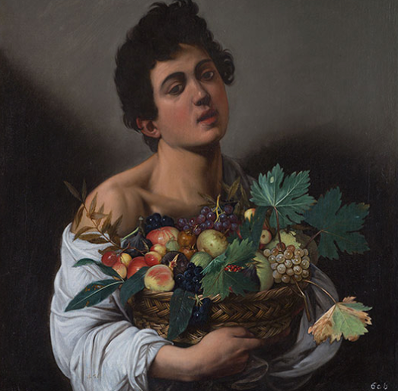
Caravaggio’s “Boy with a Basket of Fruit” in Focus at the Morgan Library (January 16 through April 19, 2026)
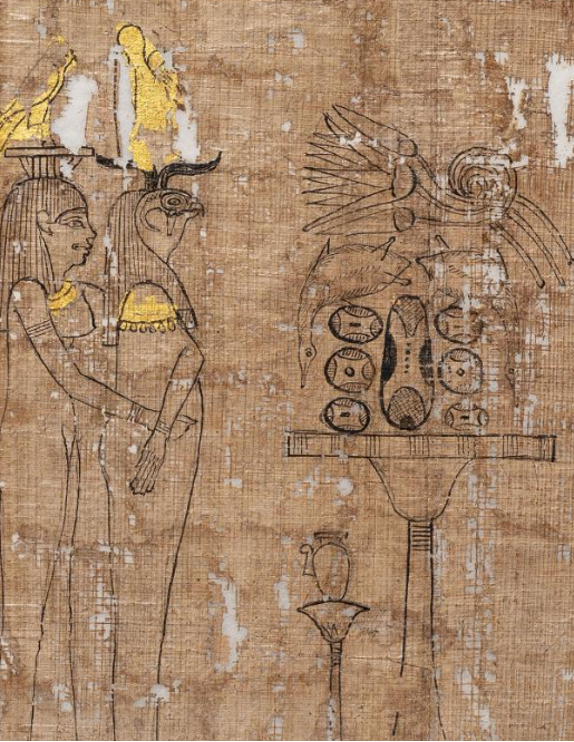
Unrolling Eternity: The Brooklyn Books of the Dead at the Brooklyn Museum (starting January 30)
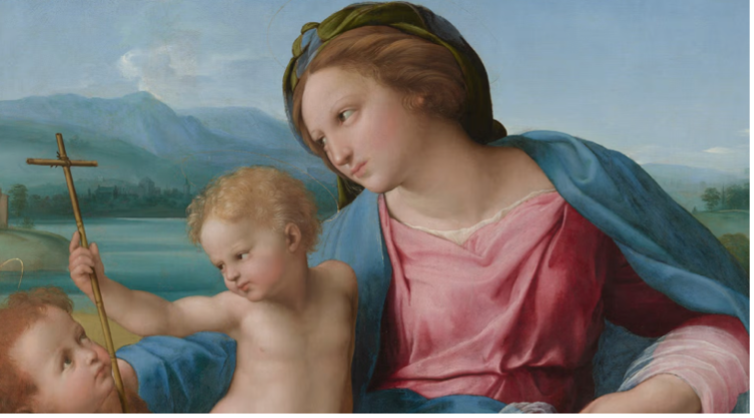
Raphael: Sublime Poetry at the Metropolitan Museum of Art (March 29–June 28, 2026)

 Fordham Art Law Society (FALS)
Leave a comment