Art of the Month
Monthly Articles
A New Arrangement Allows the Met to Display Art Owned by Nigeria
In a move that reflects changing views at leading museums on how to evaluate potential acquisitions and re-examine collections, the Metropolitan Museum of Art developed a plan to return three African masterworks to Nigeria while keeping them accessible to audiences and scholars in New York. Last year, the Met began discussions with longtime art collectors about the three pieces. While the provenance of the works was detailed and there was no evidence that any had been stolen or come into the United States, it was not quite strong enough for the museum to add the works to its collection.
Working with collector Ceil Pulitzer and officials of the Nigerian National Commission for Museums and Monuments (NCMM), curators and administrators at the Met created an arrangement when Ms. Pulitzer donated the three works to the Friends of Nigeria’s Cultural Heritage, established by the NCMM. Under the arrangement, the works will be on loan for 25 years in the Met’s recently redesigned Michael C. Rockefeller Wing. Leaders at the Met believe the arrangement provides a model they and administrators at other museums can use as they navigate “an environment in which opinions on best practices have sometimes changed significantly within short periods.” According to Mr. Hollein, the “main mission is to bring outstanding objects to the public” while ensuring “these objects do not go back into the art market or a private collection.” Instead, it will be “shared in perpetuity with the public.”
The arrangement also allows the Met to show works of ancient Ife art for the first time. While some of the most celebrated works in the African art canon have come from digging in the ancient city of Ife, the Met has not wanted to contribute to unauthorized excavations in Nigeria. Alisa LaGamma, the curator in charge of the Rockefeller Wing, said: “We as an institution never acquired works from this tradition, even though we are in awe of the beauty and the excellence and their historical importance.”
Olugbile Holloway, the director-general of the NCMM, said in a statement: “This initiative is very important to use because it enables Nigerian antiquities in private collections to be displayed at The Met and seen by a wide and diverse audience.” Ms. Pulitzer, who seems equally excited about the arrangement, said: “It’s thrilling to explore new ways of at once strengthening Nigeria’s museum and sharing works that have given me great personal joy.”
This arrangement comes at a time when standards at some institutions for artifacts without a clear history have become more rigorous. While the attitude used to be don’t acquire something you know to be stolen, the attitude today is don’t acquire something unless you know it’s not stolen.
The Limits of Copyright Law Pose Challenges for Small Artists
Gavin Snider, a watercolor artist, was commissioned by the New York Knicks to paint a piece celebrating their NBA championship run. The team posted the work to its official Instagram page on June 14th, but that same day Snider discovered a nearly identical print for sale.
The print was credited to Devon Rodriguez, an artist known for his subway sketches and who has a much larger social media presence: more than 9 million followers on Instagram compared with Snider’s 46,000. When Snider looked through Rodriguez’s account, he found what appeared to be copies of two other pieces of his artwork. Although he reached out to Rodriguez on Instagram to ask him to credit the work, Rodriguez never responded and continued selling the print.
The scenario represents a challenge for small artists operating in the digital age. Artists must promote their work on social media, but that same visibility also makes it easier for others to emulate, reproduce, or copy it. Copyright law provides only limited help in these situations.
Copyright can help defend against direct copies, but enforcement can be slow and expensive. Even without registration, copyright owners have the rights to derivative works. Still, they would need to overcome the fair use doctrine, which checks whether the copied work is transformative or whether it hurt the original work’s sales. Copyright also doesn’t protect style itself, a gap in the law that was less substantial in the past because replicating another artist’s style took time and skill, but Artificial Intelligence has removed that barrier.
According to art lawyer Adam Weissman, “There’s no single determining factor of whether something is copyright infringement just because it looks similar to something else. It’s a whole number of factors that you need to take into account.” And providing each element can run up prohibitive legal costs for smaller artists who may not be able to afford a drawn-out legal battle. “If the artist on the other side of it has far more resources, it’s going to be extremely difficult to be successful, even if they have a very valid argument,” Weissman said.
Snider’s argument more closely resembles a moral rights claim to attribution, which most countries recognize under the Berne Convention. The US equivalent, the Visual Artists Rights Act, covers only a narrow slice of fine art and offers no protection to a commissioned watercolor or a working illustrator.
Facing these limits of copyright law, Snider evoked a form of self-help available to small artists: shame, posting about the situation online. Because of this, Snider said he is going to approach publishing his work differently from now on, noting the role reach played. “If anybody could take a piece of art, plug it through, use it as an AI prompt, the person who’s making the original art really is at a disadvantage.”
The Legal Fight for Nazi Looted Art Continues with New Laws in Place
Two lawsuits have been filed in California following the recent passage of laws by California and Congress, which strengthen U.S.-based claims to artwork that was forcibly taken from Jewish families during World War II.
The Jewish Federation of Greater Los Angeles and its board chair, Daniel Gryczman, filed a lawsuit in Los Angeles Superior Court against the Norton Simon Museum in Pasadena seeking the return of “Adam and Eve.” The other lawsuit was filed in federal court in Los Angeles by the daughters of the late Dinah Gottliebova Babbit, a Holocaust survivor and California-based animator who was held in Auschwitz, demanding the return of watercolors of fellow prisoners that the artist was forced to paint for Josef Mengele. Spokespersons for both museums say the museums legally hold title to the works and intend to continue displaying them to the public.
Rabbi Noah Farkas, president and CEO of the Jewish Federation of Los Angeles, said the federation plans to use most of the net proceeds from the recovered art to help Holocaust survivors living in the Los Angeles area. “These are incredibly beautiful European masterpieces stolen from a Jewish family to enrich the Nazi party and fund the war and death machine against the people,” he said. “It’s our honor to take on this role on behalf of the community and use most of the proceeds to help these elderly survivors live out the last years of their lives in dignity, comfort and peace – something their family members were denied during the Holocaust.”
The Norton Simon Museum released a statement noting that a federal court in 2018 unanimously determined the museum had proper title to the Cranach paintings. “For nearly 50 years, they have been on view at the Norton Simon Museum and will continue to be accessible to the public for years to come,” the statement said.
Pawel Sawicki, a spokesperson for the Auschwitz Memorial, said “the watercolors of Roma victims that Gottliebova Babbitt was forced to paint by Mengele to document his horrendous experiments and racial research, ‘must remain in the Memorial’ to document the man’s crimes.” He said, “these paintings must not be mischaracterized as ‘Nazi-looted art’ because Gottliebova Babbitt painted them against her will as a prisoner and therefore didn’t have ownership of the watercolors.”
According to Sawicki, the portraits are among the few remaining documents of Mengele’s criminal experiments. They should be treated as unique documents related to the history of the Auschwitz concentration camp. “While fully respecting the rights of people who created some of the documents here, we are of the opinion that any loss in the collections of the Memorial will constitute irreparable harm,” he said.“… The loss of even the smallest part of the documentation is an irreparable loss and blemish on the memory of the victims of Auschwitz.”
These lawsuits follow the passage of California Assembly Bill 2867, signed by Governor Gavin Newsom in September 2024, which requires that the state law must apply in lawsuits brought by California residents or their heirs to recover art seized during the Holocaust or during other acts of persecution. Jessel Gabriel, who wrote the bill, said it’s time for museums to “do some deep introspection on whether they want to be on the right side of history.” The Holocaust Expropriated Art Recovery Act of 2025 was also recently signed into law and updated. This law permanently eliminated the expiration date to allow Holocaust survivors and their heirs to pursue the recovery of these works of art indefinitely.
Club News
Thank you to everyone who came to our first general body meeting! We loved getting the chance to meet you guys and we are really looking forward to the year ahead.

Looking ahead, we have a few events coming up this semester that we are very excited about and we would love to see you there!
October 20th: We will be hosting a lunch time career panel about careers at the intersection of arts, culture, and IP. Learn from various art law professionals about how their careers took shape and what the work looks like day to day.
November 17th: Join us to learn about artist estates and foundations – specifically, the legal and practical questions that arise in planning for what happens to an artist’s work and legacy, both during their lifetime and after.
We will send out more information about the events closer to the date.
Upcoming Art Exhibitions
If you want to take a break from studying, here are some upcoming art exhibitions around the city!
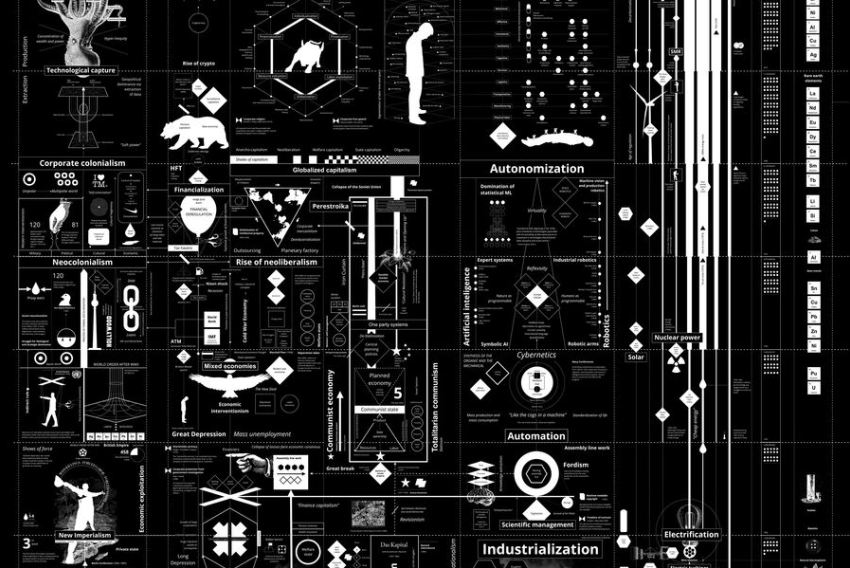
Full Disclosure: The Edge of Information Design
- September 27, 2026 – June 13, 2027
- MoMA
Exhibition details available here.
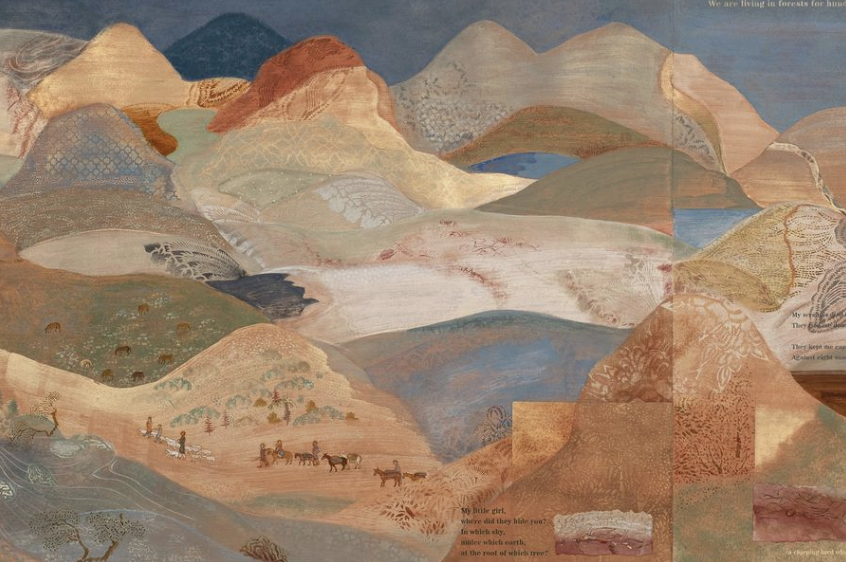
Nilima Sheikh: Fractured Skies
- September 27, 2026 – June 13, 2027
- MoMa
Exhibition details available here.
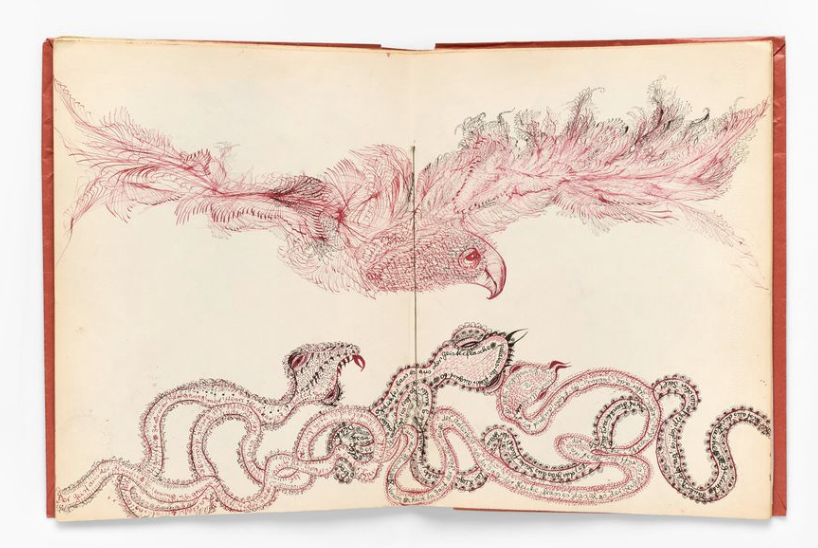
The Surrealist Book: Tomorrow Lives in Mirrors
- October 4, 2026 – January 23, 2027
- MoMA
Exhibition details available here.
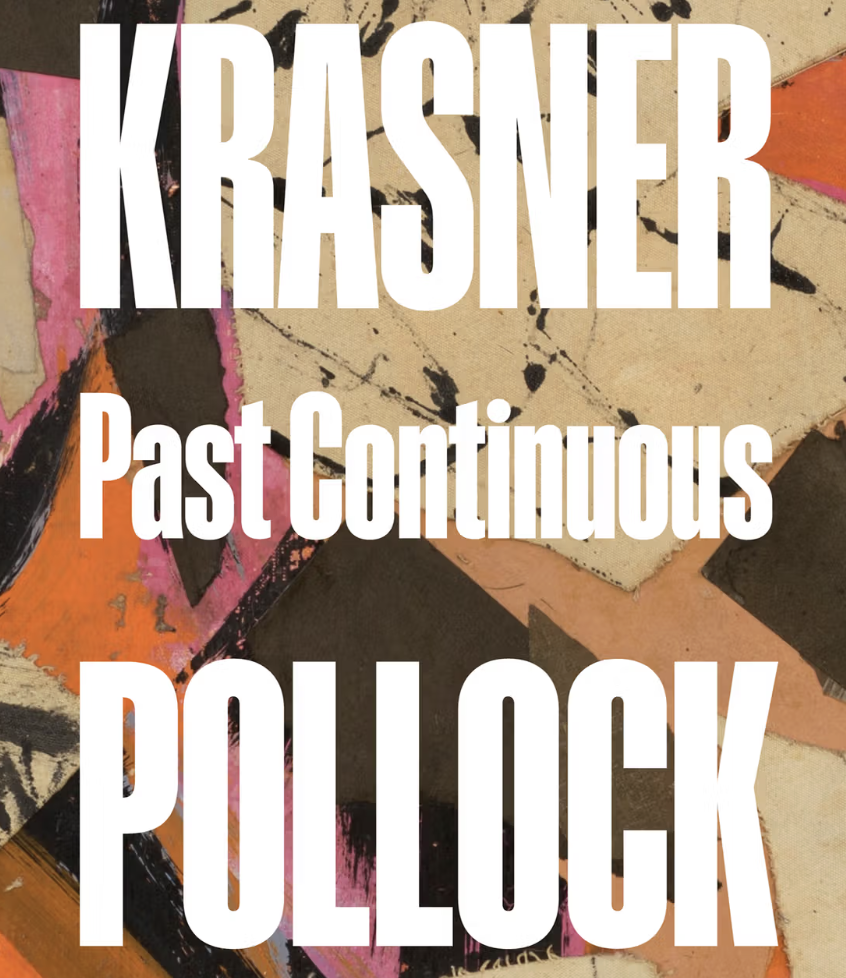
Krasner and Pollock: Past Continuous
- October 4, 2026 – January 31, 2027
- The Met Fifth Avenue
Exhibition detail available here.
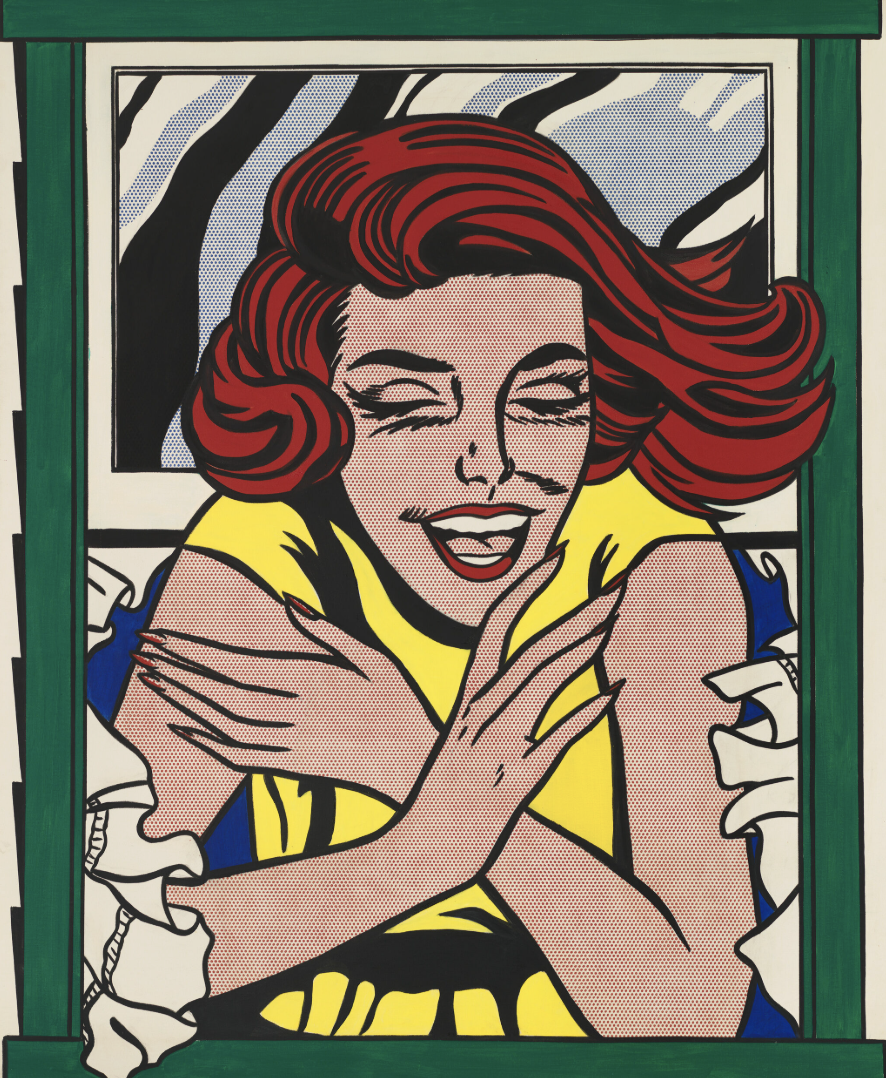
Roy Lichtenstein: Like New
- October 11, 2026 – May 10, 2027
- The Whitney
Exhibition details available here.
Acknowledgments
Thank you to our professional advisors Aaron Haines and Carrie Scott! Throughout the year, they will provide invaluable perspectives on the art world, help us develop meaningful programming, and connect our members to the broader field.


Leave a Reply